 Skip to content
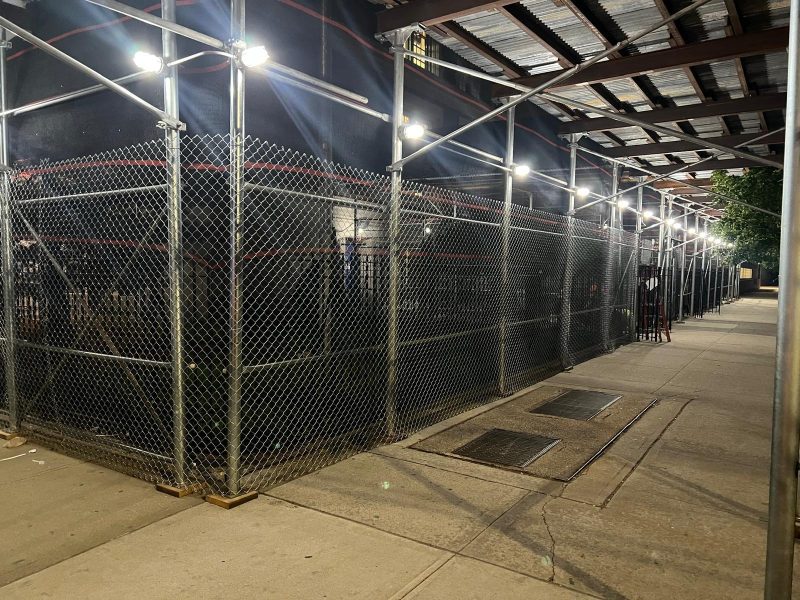
If you’ve walked almost anywhere in New York City, you’ve spent time inside one — that wooden-roofed tunnel hugging the sidewalk in front of a building under construction. Maybe you’ve squeezed past one on a narrow Midtown block, or cursed the one blocking your favorite storefront for what felt like three years. New Yorkers have a complicated relationship with sidewalk sheds.
But if you own a building in the five boroughs, sidewalk sheds aren’t just an annoyance you walk under. They’re a legal obligation, a financial liability, and — thanks to sweeping new laws in 2025 — a ticking clock the moment they go up.
This guide covers everything building owners, property managers, and contractors actually need to know: when you need one, how to get the permit, what the 2025 laws changed, and how to avoid the violations that catch people off guard.
So What Exactly Is a Sidewalk Shed?
The official name is “sidewalk shed,” but you’ll also hear it called a construction bridge, a scaffolding shed, or — if you’re a New Yorker in a hurry — just “the shed.” Whatever you call it, it’s the temporary overhead structure built over a public sidewalk to protect pedestrians from falling debris while work happens on the building above.
It’s worth clearing up a common point of confusion: a sidewalk shed is not the same thing as scaffolding. Scaffolding is what workers stand on to access the building’s exterior. The shed is what protects the people walking below. On a typical facade repair project, you’ll have both — a scaffold rising up the building face, and a shed covering the sidewalk underneath.
The NYC Department of Buildings (DOB) treats sidewalk sheds as some of the most tightly regulated temporary construction equipment in the city. And with good reason — a poorly built or neglected shed is a danger to the very people it’s meant to protect.
When Does Your Building Actually Need One?
Here’s where a lot of building owners get tripped up. The requirement isn’t “whenever you do construction.” It’s more specific than that, and knowing the thresholds matters.
- New Building Construction: When your building will exceed 40 feet in height and the distance between the building’s exterior wall and the sidewalk is equal to or less than half the building’s height. If debris could realistically reach pedestrians below, the shed is required.
- Facade Renovation or Enlargement: The same 40-foot rule applies to any exterior work happening above 40 feet on a building close enough to the sidewalk.
- Demolition Work: Any full or partial exterior demolition above 25 feet requires a sidewalk shed — no matter how far the building sits from the curb.
- Emergency Hazards: If a brick falls from your parapet or an inspection reveals serious masonry instability, the DOB can require an immediate shed. Owners may put the shed up first and file the permit paperwork within 24 hours.
Exceptions exist — fully closed sidewalks, equivalent private overhead protection, rooftop work with proper safety nets — but they’re narrower than they sound. If you’re unsure, assume you need a permit and verify with a licensed professional.
Getting the NYC Sidewalk Shed Permit: A Realistic Walkthrough
The DOB does not allow you to just build a sidewalk shed and sort out the paperwork later — except in the emergency scenario above. Every shed needs a permit before it goes up, and the process has several moving parts.
Start in DOB NOW: Build
All sidewalk shed permit applications go through DOB NOW: Build, the city’s online portal. The permit is issued to a Registered General Contractor — one who is actively registered with DOB, carries the required insurance, and has a physical place of business in New York City. If your shed uses a pre-approved Board of Standards and Appeals (BSA) design, the process is more straightforward. Custom designs require a licensed New York State PE or registered architect to prepare and stamp the drawings first.
Pull Your Documentation Together
The core package includes a PW2 work permit application, engineering drawings or BSA design reference, proof of contractor registration, and current insurance certificates. One thing people miss: shed lighting is a separate scope that can only be installed by a licensed electrician, and this needs to be reflected in your documentation from the start.
Check Whether DOT Gets Involved
If your shed extends beyond the property line into the street — common on narrow Manhattan blocks — you’ll also need a Building Operation Permit from the NYC DOT’s Office of Construction Mitigation and Coordination. DOB won’t issue the final work permit until DOT signs off, so factor this into your schedule.
Post the Permit Visibly
Once you have approval, print the permit and post it where anyone walking by can see it. NYC law requires a 25-square-foot sign showing the permit holder’s name, address, phone number, permit number, and expiration date. The DOB’s Scaffold Safety Team checks for it, and a missing sign is a citable violation.
The 2025 Laws That Changed Everything
For decades, New York City’s sidewalk shed regulations were more or less static. Then 2025 arrived, and the city passed three significant pieces of legislation — Local Laws 47, 48, and 51 — the biggest overhaul of sidewalk shed rules in a generation.
The motivation was hard to miss. At any given moment, more than 8,400 scaffolding and shed structures sat on NYC sidewalks. Some had been up for years. The city’s “Get Sheds Down” initiative was designed to end all of that.
Local Law 47: Taller Sheds, More Colors, Narrower Coverage (Effective August 15, 2025)
Three notable changes came with Local Law 47. First, the minimum ceiling height jumped from 8 feet to 12 feet. If you’ve ever hunched slightly walking under an older shed, you know why this matters. Exceptions exist — if hitting 12 feet would block required light and air for occupants, a design professional can authorize a lower height, but never below the old 8-foot floor.
Second, the mandatory hunter-green paint is gone. Any solid color matching the building’s facade, trim, cornice, or visible roofing is now permitted — helpful for buildings in historic districts or high-traffic commercial corridors.
Third, a new coverage exception reduces shed length requirements for routine facade maintenance on buildings without upper-story setbacks. This can meaningfully lower installation costs, though the DOB can override the exception at sites with unusual hazards.
Local Law 48: The 90-Day Permit Clock
This one caught a lot of building owners off guard — and it’s probably the most operationally significant change of 2025.
Previously, sidewalk shed permits were valid for one year. Local Law 48 cut that to 90 days. Every renewal now requires a written progress report from a licensed design professional. And here’s the enforcement mechanism with real teeth: you cannot renew your permit if you have outstanding DOB penalties. Unresolved violations become an active obstacle to keeping your shed legal.
Owners with a shed up but no active work happening also face escalating monthly fines based on shed length. The message from the city is clear: sheds go up, work happens, sheds come down.
Local Law 51: Real Deadlines for FISP Projects
Local Law 51 targets sheds installed in connection with a FISP (Facade Inspection and Safety Program) filing. Once a shed goes up tied to a FISP project, three deadlines run simultaneously:
- Within 5 months: Construction documents filed with DOB
- Within 8 months: All permit applications submitted, measurable progress on record
- Within 2 years: All repair work completed
Miss any milestone and violations of $5,000 to $20,000 per deadline can follow. One extension is available, but requires strong documentation — contracts, proof of material delays, access issues — to get it.
Keeping the Shed Up Safely (And Legally)
Getting the permit is just the beginning. For as long as your sidewalk shed stands, you’re responsible for maintaining it. Under NYC Building Code Section BC 3307.6.5, a daily maintenance log must be kept on-site at all times, tracking the condition of every component: planks, pipes, clamps, lighting, and signage.
The DOB’s Scaffold Safety Team does unannounced walkthroughs and can issue violations of up to $2,000 for safety lapses — bad lighting, a loose plank, an expired permit that wasn’t renewed on time. LED lighting is now required throughout at double the previous brightness levels, and fixtures near windows and doors need shields or adjustable mounts to control glare into neighboring properties.
The General Contractor is typically the responsible party for maintenance. If no active GC is on-site — say, if a project stalls and the contractor is no longer engaged — that responsibility falls back to the building owner.
Taking It Down: The Removal Process
When work wraps up, the shed must come down within 90 days of completing the facade repairs. Removal requests go through DOB NOW: Build: select “+Requests and Site Safety,” then “Site Safety Release and Sidewalk Shed Removal,” and choose the appropriate request type.
Don’t leave the shed up after the work is done hoping no one notices. Environmental Control Board violations for sheds that overstay their welcome run up to $8,000 per violation — and the “Get Sheds Down” initiative means the city is actively looking for exactly this.
Who’s Responsible for What
When something goes wrong with a sidewalk shed in NYC, the question of who’s liable matters a great deal.
- Property Owner: Ultimately on the hook for installation, maintenance, and removal. All violations are the owner’s financial exposure, even if a contractor caused the problem.
- Registered General Contractor: Holds the permit, coordinates installation and dismantling, and must carry DOB safety endorsements for buildings four stories and up.
- Professional Engineer / Registered Architect: Handles technical drawings for non-standard designs, signs renewal reports, and certifies ongoing code compliance.
- Licensed Electrician: The only person who can legally install shed lighting. This isn’t a gray area.
- NYC Department of Buildings (DOB): Issues permits, conducts inspections, and administers the process through DOB NOW: Build.
- NYC Department of Transportation (DOT): Steps in when the shed footprint extends into public streets, issuing the Building Operation Permit that DOB requires before approving the work permit.
The Violations That Catch People Off Guard
The most common sidewalk shed violations in NYC are also the most preventable. Expired permits are at the top of the list — often because owners didn’t realize the 90-day clock had reset the dynamic entirely. Inadequate lighting is another frequent citation, especially now that LED standards have been raised. Missing or improper signage shows up regularly. And sheds that outlast their projects — still standing weeks after the last worker left — are exactly what the 2025 laws were written to eliminate.
Treat the day your shed goes up as Day 1 of a countdown. Get your PE or RA engaged before installation, not after something goes sideways. Build your facade repair schedule around 90-day permit cycles. Keep documentation current, pay penalties before renewals, and don’t let the shed become background scenery you stop noticing.
Quick Reference: Sidewalk Shed Installation NYC
Everything you need to know at a glance:
| Topic | Key Fact |
| Trigger Height — New Construction | Buildings over 40 feet |
| Trigger Height — Demolition | Structures over 25 feet |
| Permit Duration (2025+) | 90 days (was 1 year) |
| Minimum Ceiling Height (2025+) | 12 feet (was 8 feet) |
| Filing Platform | DOB NOW: Build |
| Emergency Permit Window | 24 hours after work begins |
| FISP Repair Completion Deadline | Within 2 years of shed installation |
| Max ECB Violation — Expired Permit | Up to $8,000 per violation |
Sidewalk shed installation in New York City has always been complicated. The 2025 laws made it more demanding — shorter permit windows, stricter timelines, bigger penalties. But the underlying logic is sound: sheds exist to protect people, not to serve as indefinite placeholders while building repairs get deferred.
The faster the work happens, the sooner the shed comes down, and the better it is for everyone — including the building owner who doesn’t want to spend the next two years renewing 90-day permits. Start early, hire your design professional upfront, and treat every deadline as real. In New York City’s regulatory environment, that mindset isn’t just good practice — it’s the difference between a smooth project and a violation notice that arrives long after the last plank is gone.
