 Skip to content
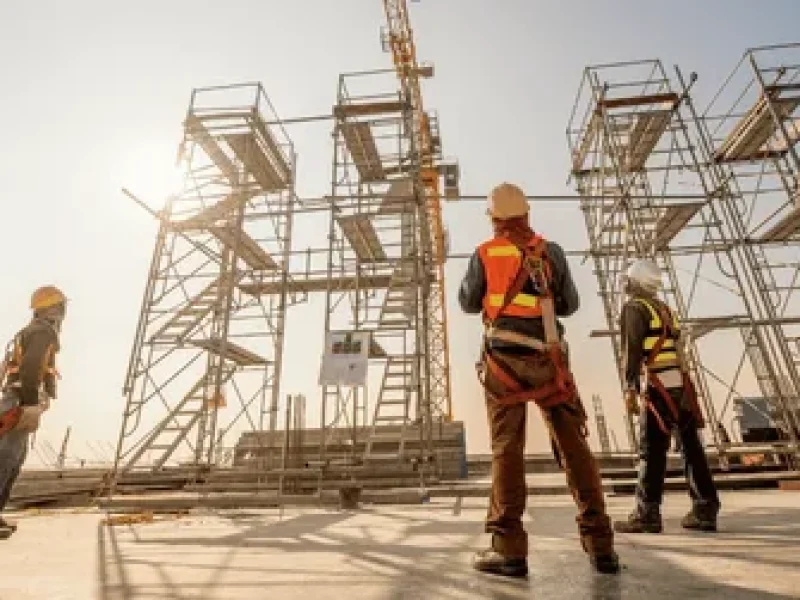
When a construction project begins on Long Island — whether it’s a facade restoration on a Nassau County office building or a multi-story development in Suffolk County — the first structural decision made above ground is also one of the most consequential: which scaffolding system will keep workers safe and the project on schedule?
Commercial scaffolding on Long Island is not a commodity. It’s a system of engineered access, legal compliance, and site-specific risk management. Understanding what separates a reliable commercial scaffolding provider from a generic rental company can mean the difference between a smooth build and a project-stopping safety violation.
What Is Commercial Scaffolding (and How Does It Differ From Residential)?
Commercial scaffolding refers to temporary elevated platforms designed for large-scale construction, renovation, facade repair, and maintenance on non-residential or multi-family structures. Unlike residential scaffolding — which typically supports lighter loads over shorter durations — commercial scaffolding must accommodate heavier materials, larger crews, extended timelines, and strict compliance with OSHA standards and New York State DOB regulations.
On Long Island, commercial projects span a wide range of building types: retail centers, warehouses, hospitals, schools, and mid-rise office complexes. Each structure presents different access challenges, load requirements, and permit obligations — which is exactly why a one-size-fits-all scaffolding solution doesn’t exist here.
Types of Commercial Scaffolding Systems Used on Long Island
Choosing the right scaffolding type affects worker safety, project efficiency, and regulatory compliance all at once. The main systems used in Long Island commercial construction include:
- Frame scaffolding — The most widely deployed system for general access. It assembles quickly, supports significant vertical height, and suits facade work, painting, and inspection on mid-height commercial structures.
- System (modular) scaffolding — Uses standardized components to build complex, load-rated platforms around irregular facades and large footprints. Especially valuable for buildings with non-standard geometry.
- Suspended scaffolding — Hangs from overhead structural anchors and is the preferred method for high-rise exterior work such as window replacement, cladding repair, and curtain wall maintenance, where ground-supported scaffolding is impractical.
- Mast climber scaffolding — Provides motorized vertical movement for extended renovation projects that require continuous access across large facade sections.
Each system should be selected based on the building’s height, the work being performed, load requirements, and how long the site will be occupied.
OSHA Compliance and New York DOB Regulations
Long Island commercial scaffolding projects fall under overlapping regulatory authority.
Federally, OSHA 29 CFR Part 1926, Subpart Q governs scaffolding safety on construction sites and mandates guardrail systems, toe boards, safe access points, and maximum load capacities. Violations carry significant financial penalties and can trigger project shutdowns.
At the state and city level, New York’s Department of Buildings (DOB) enforces Local Law requirements — including Local Law 11, which requires periodic facade inspections on buildings above six stories — and demands permit coordination before scaffolding installation can begin. In incorporated villages and across Nassau and Suffolk county jurisdictions, additional permit steps may apply depending on project type and location.
A qualified commercial scaffolding contractor handles permit acquisition as part of the service, not as an afterthought. That includes site surveys, engineering sign-offs, and inspection scheduling.
How to Choose a Commercial Scaffolding Contractor on Long Island
Not every scaffolding company operating on Long Island has the experience or certification to manage large commercial jobs. Before signing a contract, project managers and general contractors should evaluate providers on these criteria:
- OSHA Certification and Safety Record
All crew members should hold current OSHA-10 or OSHA-30 certifications. Ask for documentation. - Engineering and Design Capability
Commercial projects often require custom scaffold designs. Your provider should have planners who account for site layout, load demands, wind exposure, and surrounding pedestrian traffic. - Permit Coordination Experience
A contractor unfamiliar with Long Island permit processes creates timeline risk. Choose a provider with a documented history of successful permit coordination across Nassau and Suffolk counties. - Equipment Quality and Inspection Protocols
All scaffolding equipment should pass rigorous inspection before and after each rental. Deteriorated components are a leading cause of worksite accidents. - Project Size Flexibility
Whether the job is a single-story retail facade or a large-scale development, your contractor should have the fleet and crew capacity to match.
Scaffolding in Long Island’s Commercial Construction Market
Long Island’s commercial real estate sector continues to grow. Nassau and Suffolk counties have seen sustained investment in healthcare infrastructure, mixed-use development, and institutional construction — and each project generates demand for scaffolding services that meet both technical and regulatory complexity.
Prime Scaffold NYC, operating from its Deer Park location on Long Island Avenue, serves this market with OSHA-compliant equipment, experienced installation crews, and a full-service model that includes site assessment, permit coordination, delivery, installation, and dismantling. For general contractors working from Hempstead to Riverhead, a scaffolding partner who understands the regional regulatory environment is a material advantage.
Planning Your Project: Key Questions to Ask
Before requesting a quote, prepare clear answers to the following:
- What is the total height and facade area requiring access?
- What tasks will be performed from the scaffold (painting, masonry, window work, inspection)?
- What is the expected project duration?
- Are there pedestrian protection requirements (sidewalk sheds, overhead containment)?
- What are the site’s load-bearing constraints?
Answering these in advance lets your contractor design a system, estimate costs accurately, and start the permit process without delay.
Frequently Asked Questions
What is the difference between commercial and residential scaffolding?
Commercial scaffolding is engineered for heavier loads, larger crews, longer project durations, and stricter OSHA and NY DOB compliance than residential scaffolding, which typically supports lighter work over shorter periods.
Do I need a permit for scaffolding on Long Island?
In most cases, yes. Permit requirements vary by jurisdiction across Nassau and Suffolk counties and within incorporated villages. A qualified contractor coordinates the necessary permits, site surveys, and inspections before installation begins.
Which type of commercial scaffolding is best for high-rise facade work?
Suspended scaffolding is generally preferred for high-rise exterior tasks such as window replacement, cladding repair, and curtain wall maintenance, where ground-supported systems are impractical.
How do I choose a reliable commercial scaffolding contractor?
Look for current OSHA certifications, in-house engineering and design capability, proven Long Island permit experience, strict equipment inspection protocols, and the fleet capacity to scale with your project size.
Conclusion
Commercial scaffolding on Long Island sits at the intersection of construction engineering, worker safety, and regulatory compliance. The best outcomes — on-time delivery, zero safety incidents, and clean permit records — come from selecting a provider with the expertise to manage all three from the start.
For Long Island commercial projects of any scale, Prime Scaffold NYC offers the equipment quality, regulatory knowledge, and hands-on project management to support your build from the ground up.
Request a free quote: primescaffoldnyc.com/commercial-scaffolding-services-long-island | (516) 805-8500
