 Skip to content
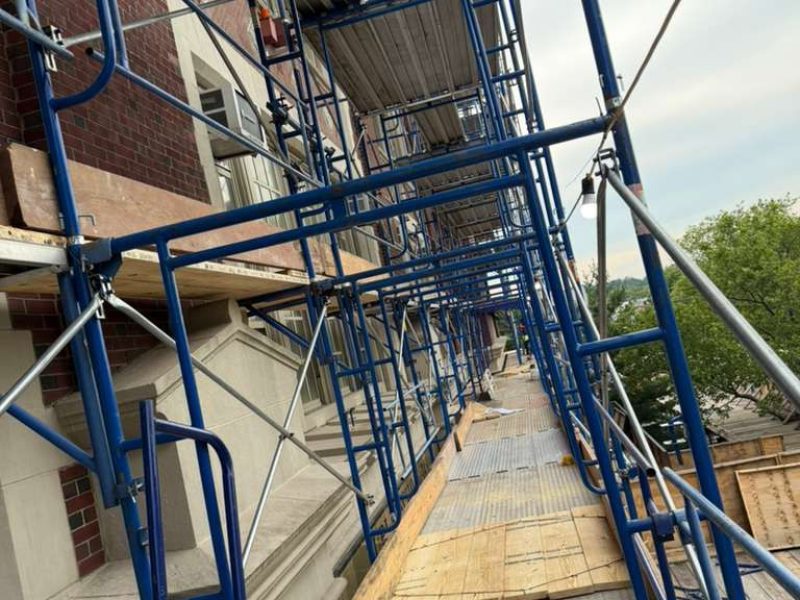
Pipe scaffolding, also known as tube and coupler scaffolding, is the most widely used temporary access system on New York City job sites. It is the structure you see wrapped around brownstones, apartment buildings, and commercial facades whenever masonry work, painting, waterproofing, or Local Law 11 (FISP) inspections are underway. Unlike frame scaffolding, pipe scaffolding is built piece by piece from individual steel tubes and couplers, which makes it the most adaptable system for NYC’s irregular building shapes, tight lot lines, and strict Department of Buildings (DOB) requirements.
If you are a property manager, general contractor, or homeowner searching for pipe scaffolding services in NYC, this guide covers what the system is, when it’s required, how pricing works, and how to choose a scaffolding company that will keep your project compliant and on schedule.
What Is Pipe Scaffolding and Why NYC Projects Rely on It
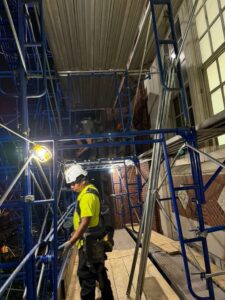
Pipe scaffolding consists of galvanized steel tubes connected with couplers, cross braces, and base plates to form a rigid, freestanding, or wall-supported platform. Because each section is assembled on-site rather than pre-fabricated into fixed frames, crews can shape the structure around bay windows, cornices, fire escapes, and uneven building lines that are common throughout Manhattan, Brooklyn, and Queens.
This flexibility is the main reason pipe scaffolding dominates the NYC market over frame or system scaffolding:
- It can be built to almost any height, width, or configuration.
- It adapts to irregular facades, setbacks, and rooftop access points.
- It supports heavier loads, which matters for masonry restoration and concrete work.
- It integrates with sidewalk sheds, netting, and overhead protection required by the DOB.
For a closer look at how these structures are engineered for different building types, our pipe scaffolding services page breaks down the components and setup process in more detail.
When Pipe Scaffolding Is Required in New York City
NYC’s building code and DOB regulations trigger scaffolding requirements far more often than most property owners expect. Common situations include:
Local Law 11 / FISP Facade Inspections Buildings taller than six stories must undergo facade inspections on a rolling cycle. Pipe scaffolding gives inspectors and repair crews safe, close-range access to parapets, lintels, and masonry joints.
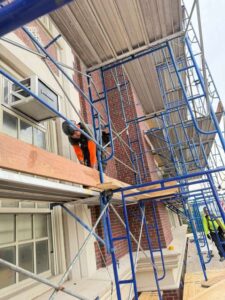
Facade Repair and Restoration Brick repointing, terra cotta repair, and waterproofing all require scaffolding that can support workers and materials at height for extended periods.
Roof and Parapet Work Roof replacements, coping repairs, and parapet rebuilding often need scaffolding that extends above the roofline, which pipe systems handle more easily than modular frames.
Sidewalk Shed Installation When a building presents a falling-object hazard, the DOB requires a sidewalk shed. Pipe scaffolding is frequently used to support the shed roof and connect it to the building’s upper scaffold sections.
New Construction and Vertical Additions Pipe scaffolding provides the working platforms needed for bricklaying, window installation, and exterior finishing on new builds.
How Pipe Scaffolding Services Work: From Permit to Teardown
A professional pipe scaffolding company in NYC typically manages the entire lifecycle of the structure, not just the physical assembly. Here’s what the process generally looks like.
1. Site Survey and Engineering Review
A technician evaluates the building’s dimensions, adjacent structures, sidewalk width, and any overhead obstructions like power lines or subway gratings. For taller or more complex jobs, a licensed engineer may need to file scaffold plans with the DOB.
2. Permitting and DOB Filing
Most scaffolding over a certain height, or any structure connected to a sidewalk shed, requires a DOB permit. Established scaffolding companies handle this filing directly, which saves property owners from navigating the paperwork themselves.
3. Assembly and Load Testing
Crews erect the scaffold tube by tube, securing it to the building through wall ties or tiebacks where required. Platforms, guardrails, and toe boards are installed to meet OSHA and DOB safety standards before any trade work begins.
4. Ongoing Inspections
NYC requires periodic scaffold inspections, especially after storms or high-wind events. A reliable provider will re-inspect the structure on a set schedule and document each check.
5. Dismantling and Site Restoration
Once the underlying work is complete, the scaffold is disassembled in reverse order, and the sidewalk or building perimeter is restored to its original condition.
Pipe Scaffolding vs. Frame and System Scaffolding
Property owners sometimes ask why a contractor recommends pipe scaffolding instead of the pre-fabricated frame systems used on many suburban or ground-level jobs. The short answer is adaptability and load capacity.
| Feature | Pipe Scaffolding | Frame Scaffolding |
|---|---|---|
| Customization | High — built to fit any facade | Limited to standard frame sizes |
| Height capability | Suitable for high-rise facade work | Best for low to mid-rise |
| Load capacity | Higher, suited for masonry and heavy materials | Lighter-duty applications |
| Assembly time | Longer, more labor-intensive | Faster for simple, uniform structures |
| Common NYC use | Facade restoration, FISP work, sidewalk sheds | Interior work, smaller renovations |
For most NYC exterior projects, especially those involving DOB filings, pipe scaffolding remains the standard because it can be engineered to match the exact geometry of the building rather than forcing the building to fit a fixed frame size.
What Determines the Cost of Pipe Scaffolding in NYC
Pricing varies based on several factors, and any company offering a flat number without a site visit should be treated with caution. The main cost drivers are:
- Height and square footage of the area being scaffolded
- Duration of rental, since most jobs are billed on a monthly or project-length basis
- Sidewalk shed requirements, which add materials and DOB filing fees
- Access complexity, including narrow lots, adjacent buildings, or protected landmarks
- Engineering and permit fees, required for taller or more complex structures
Property owners planning a facade project should request an itemized quote that separates setup, monthly rental, engineering, and teardown costs. You can see typical project scopes and get a tailored estimate through our scaffolding project gallery, which shows completed pipe scaffolding jobs across the five boroughs.
Choosing a Pipe Scaffolding Company in NYC
Not every scaffolding provider is equipped to handle DOB filings, tenant safety plans, and multi-month facade projects. When comparing companies, look for:
- Active NYC scaffolding licenses and proof of insurance
- In-house DOB filing experience, rather than outsourcing permits
- A documented inspection schedule, not just a one-time setup
- Experience with your building type, whether that’s a townhouse, co-op, or commercial tower
- Clear, itemized pricing with no vague lump-sum estimates
A company that manages the full process — survey, filing, assembly, inspection, and teardown — will almost always save property owners time and reduce liability compared to piecing the job out to multiple vendors. Our team’s approach to full-service pipe scaffolding installation is built around exactly this end-to-end model.
Safety Standards Every NYC Scaffold Must Meet
Because pipe scaffolding supports workers at height, safety compliance is non-negotiable. NYC scaffolds must meet:
- OSHA 1926 Subpart L standards for construction scaffolding
- DOB Building Code Chapter 33 requirements for sidewalk sheds and supported scaffolds
- Guardrail, toe board, and platform width minimums at every working level
- Tie-back and bracing requirements based on height and wind exposure
- Regular re-inspection, particularly after severe weather
Any provider you hire should be able to explain exactly how their setup satisfies each of these points, not just state that it’s “up to code.”
Get a Quote for Pipe Scaffolding Services in NYC
Whether you’re managing a Local Law 11 deadline, a facade restoration, or a new construction project, the right scaffolding partner keeps your job compliant, your workers safe, and your timeline on track. If you need pipe scaffolding installed anywhere in the five boroughs, contact our team for a site survey and a detailed, no-obligation quote.
Frequently Asked Questions
How long does it take to install pipe scaffolding in NYC?
Most residential and small commercial jobs take one to three days to erect, depending on building height and site access. Larger facade projects with sidewalk sheds can take longer due to permit review and engineering sign-off.
Do I need a permit for pipe scaffolding on my building?
In most cases, yes. Any scaffold connected to a sidewalk shed, or exceeding certain height thresholds, requires a DOB permit and often an engineer’s filing. A qualified scaffolding company will handle this on your behalf.
How much does pipe scaffolding cost per month in NYC?
Monthly rental costs depend on the height, length, and complexity of the structure, along with whether a sidewalk shed is required. Getting a site-specific quote is the only reliable way to estimate cost.
Is pipe scaffolding safe for high-rise facade work?
Yes. Pipe scaffolding is engineered specifically for heavy loads and tall structures, which is why it’s the standard choice for Local Law 11 inspections and facade restoration on NYC high-rises.
What’s the difference between pipe scaffolding and a sidewalk shed?
A sidewalk shed protects pedestrians from falling debris at street level, while pipe scaffolding provides the working platforms higher up on the building. The two structures are often connected but serve different safety functions.
How often does scaffolding need to be inspected once installed?
NYC requires periodic inspections throughout the rental period, with additional checks after major storms or high winds. A responsible provider will keep documented inspection records for the life of the project.
