 Skip to content
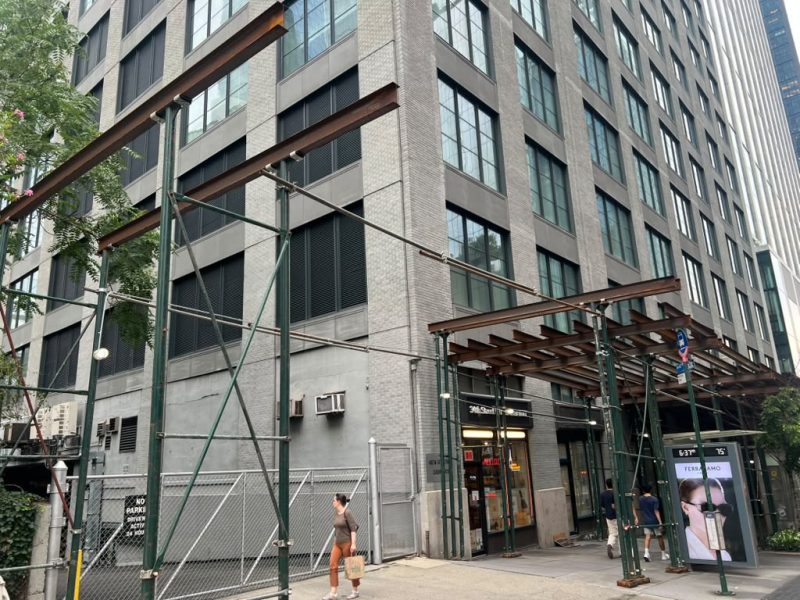
Manhattan’s streetscape is constantly evolving, and one of the most visible signs of that change is the sidewalk shed. If you’ve walked along 2nd Avenue recently, you may have noticed active construction at 1411 2nd Avenue, where crews are installing a new sidewalk shed as part of ongoing building maintenance and safety work. For residents, shoppers, and local business owners, understanding what a sidewalk shed installation involves — and why it matters — can make navigating this stretch of the Upper East Side a little easier.
What Is Happening at 1411 2nd Avenue
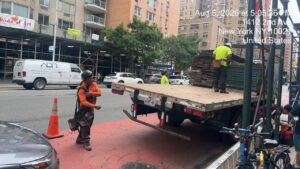
At this location, a construction crew is in the process of erecting a steel-frame sidewalk shed, a temporary but heavily engineered structure that spans the width of the sidewalk in front of the building. Projects like this are typically handled by experienced sidewalk shed installation Manhattan contractors who understand the borough’s dense foot traffic and tight sidewalk clearances. The scene is a familiar one for anyone who has spent time in New York City: workers in high-visibility gear positioned along the building’s upper floors and fire escape, guiding steel I-beams into place while ground-level crews manage rigging, staging equipment, and pedestrian safety.
The shed framework is composed of horizontal and diagonal steel beams supported by vertical posts anchored into the sidewalk. Once complete, the structure will form a protective canopy over the pedestrian walkway, allowing foot traffic to continue safely beneath the building while work continues above. This is standard practice for buildings undergoing facade inspection, repair, or renovation in dense urban corridors like 2nd Avenue, where ground-floor retail, restaurants, and residential entrances all sit within a few feet of active construction zones.
Why Sidewalk Sheds Are Required in NYC
Sidewalk sheds — sometimes called scaffolding bridges or pedestrian protection canopies — are not optional add-ons to a construction project. In New York City, they are typically mandated whenever exterior building work reaches a certain height or scope, particularly under Local Law 11, which governs the Facade Inspection & Safety Program (FISP). Buildings taller than six stories are required to undergo periodic facade inspections, and if any conditions are flagged as unsafe, the city requires immediate protective measures — including sidewalk sheds — until repairs are completed.
Even buildings that are not undergoing facade repair may need a shed for other types of work: roof replacement, window installation, brick pointing, cornice repair, or general exterior maintenance. In each case, the underlying goal is the same — protecting the public from falling debris, tools, or materials while the work is performed overhead.
At 1411 2nd Avenue, the presence of workers on both the building’s fire escape and rooftop level, combined with the extensive steel framework being assembled at street level, suggests a comprehensive project scope. This kind of coordinated, multi-level work is exactly the scenario sidewalk sheds are designed to accommodate safely, and it’s why property managers across the city increasingly turn to dedicated sidewalk shed installation NYC specialists rather than general contractors for this phase of the job.
The Installation Process: More Complex Than It Looks
To the average passerby, a sidewalk shed might look like a simple grid of steel poles and planks. In reality, the installation process is a carefully engineered undertaking that requires permits, structural calculations, and licensed oversight.
1. Permitting and Design Before any steel touches the sidewalk, the property owner or contractor must file for a sidewalk shed permit with the NYC Department of Buildings (DOB). This includes submitting structural plans prepared or reviewed by a licensed professional engineer, ensuring the shed can bear the required load — both from the structure itself and from any materials or equipment staged on top of it during the work above. Experienced scaffold contractors typically manage this permitting process directly with the DOB on the property owner’s behalf, reducing delays before ground is broken.
2. Site Preparation Crews assess the sidewalk and curb conditions, mark out the footprint of the shed, and coordinate with utility lines and building entrances to minimize disruption to residents and businesses. Traffic cones and barriers, like those visible near the loading area at 1411 2nd Avenue, are placed to manage pedestrian flow during this phase.
3. Steel Erection Vertical support posts are set first, followed by the horizontal and diagonal steel beams that form the shed’s roof structure. This is typically the most visually striking part of the process, involving workers positioned at height — on ladders, fire escapes, or temporary platforms — to guide beams into place and secure connections. Ground crews use rigging equipment, pulleys, or small cranes to lift steel sections into position, a process that requires the kind of precision only a certified scaffolding installation crew can consistently deliver on tight Manhattan sidewalks.
4. Decking and Roofing Once the frame is complete, plywood decking is installed across the top of the shed to create a solid, weatherproof canopy. This decking must meet specific load-bearing standards, since it needs to support both the weight of the shed’s future usage — additional scaffolding, netting, or materials — and provide impact protection from anything that might fall from above.
5. Safety Features and Signage The final stage includes installing perimeter netting or mesh, ensuring adequate lighting underneath the shed for nighttime visibility, adding required DOB permit signage, and confirming that ADA-compliant clearance is maintained for pedestrians, including those using wheelchairs or strollers.
Impact on the Neighborhood
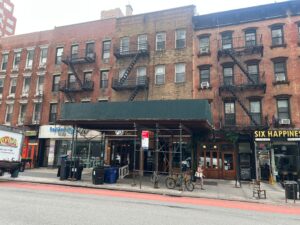
Sidewalk sheds are often seen as an inconvenience, and it’s true that they can temporarily affect visibility for storefronts, reduce natural light on the block, and create a sense of clutter along the street. Businesses like the ones visible beneath the shed at 1411 2nd Avenue — including retail storefronts with awnings and outdoor-facing signage — often have to adjust signage placement or lighting to maintain visibility during the construction period.
That said, the alternative — unprotected construction work happening directly above a busy pedestrian corridor — poses far greater risk. Sidewalk sheds allow businesses to remain open and operational throughout construction, rather than requiring a full sidewalk closure. This is a critical distinction for commercial tenants who rely on foot traffic and street-level visibility to sustain their business during renovation periods.
Safety Protocols Observed On-Site
The presence of personnel in reflective safety vests and hard hats at ground level, as seen at 1411 2nd Avenue, reflects standard site safety protocol required on active construction sites in New York City. These safety monitors are typically responsible for:
- Directing pedestrian traffic safely around or through the work zone
- Ensuring compliance with DOB site safety plans
- Monitoring for hazards such as falling debris or unsecured materials
- Coordinating with the crew working at height to confirm ground-level areas remain clear during lifts
This layered approach to safety — engineering controls like the shed itself, combined with active human oversight — is a hallmark of well-managed urban construction projects.
What to Expect Going Forward
Once the sidewalk shed at 1411 2nd Avenue is fully installed, the surrounding block should see a return to more predictable pedestrian flow, even as work continues above. Businesses beneath the shed will remain accessible, though patrons and delivery services should expect some adjustment to entry points, signage visibility, and possibly reduced curb space for a period of time. Local residents can generally expect the shed to remain in place for the duration of the exterior work, which — depending on scope — can range from several weeks to several months.
For anyone frequently passing through this stretch of 2nd Avenue, patience and awareness are the best tools. Following posted signage, respecting barricades, and staying alert around active work zones will help ensure the project proceeds safely and efficiently for everyone involved.
Property owners or managers planning similar exterior work elsewhere in the borough can contact our team to schedule a site visit and receive a free estimate for sidewalk shed or commercial scaffolding needs.
Frequently Asked Questions
1. Why is a sidewalk shed being installed at 1411 2nd Avenue?
Sidewalk sheds are typically installed to protect pedestrians during exterior building work, such as facade repair, roof maintenance, or compliance with NYC’s Facade Inspection & Safety Program (Local Law 11). The specific scope of work at this address will determine how long the shed remains in place.
2. How long do sidewalk sheds usually stay up in NYC?
Duration varies widely depending on the project. Minor repairs might require a shed for only a few weeks, while major facade restoration or full building recladding projects can keep a shed in place for many months or, in some cases, over a year.
3. Will businesses beneath the shed remain open during construction?
Yes, in most cases. One of the primary purposes of a sidewalk shed is to allow pedestrian access and business operations to continue safely beneath active construction, rather than requiring a full sidewalk or storefront closure.
4. Are sidewalk sheds regulated by the city?
Yes. The NYC Department of Buildings requires permits for sidewalk shed installation, along with structural plans prepared by a licensed engineer. Sheds must meet specific load, height, and safety standards, and are subject to inspection.
5. Is it safe to walk under a sidewalk shed?
Sidewalk sheds are engineered specifically to protect pedestrians from falling debris and construction hazards. While they can feel enclosed or dim, they are designed and permitted to meet strict city safety codes.
6. Who should I contact with concerns about the construction at this site?
Concerns about noise, safety, or code compliance related to construction sites in New York City can typically be directed to 311, which routes complaints to the appropriate city agency, including the Department of Buildings.
