 Skip to content
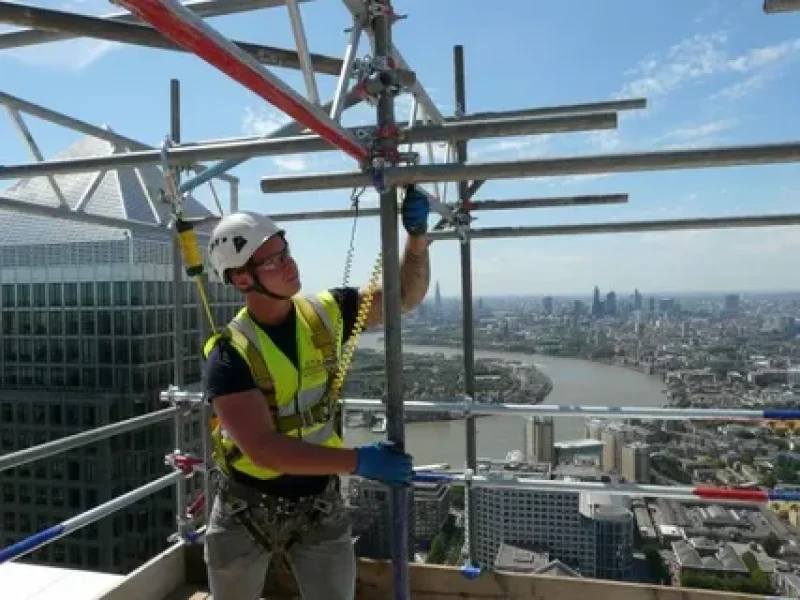
Commercial scaffolding is a temporary structural system erected around buildings to support workers, tools, and materials during construction, renovation, or maintenance tasks. Unlike residential scaffolding, commercial projects in Queens involve greater load requirements, longer durations, stricter DOB permit obligations, and far higher foot-traffic exposure — all of which raise the stakes for every decision a project manager makes.
Queens is the largest borough in New York City by area. Its construction landscape spans high-rise residential towers in Long Island City, historic mixed-use blocks in Jamaica, dense retail corridors in Flushing, and sprawling industrial facilities near JFK. Each zone presents its own logistical challenges: narrow access roads, underground utility conflicts, considerations for neighboring tenants, and locally enforced noise and vibration ordinances. A scaffolding company that lacks deep knowledge of these site conditions cannot reliably keep your project on schedule or within budget.
The Core Services That Define a Full-Service Scaffolding Provider in Queens
A capable commercial scaffolding provider in Queens does not simply drop off equipment. The service lifecycle spans four distinct phases, and each one carries its own risk profile.
Site assessment and design determine project success. Engineers evaluate load-bearing requirements, anchor points, pedestrian protection needs, and egress compliance before a single frame goes up. Skipping this step is the most common cause of mid-project delays.
Equipment selection determines both safety and efficiency. The primary system types used in Queens commercial projects include frame scaffolding for straightforward multi-story façade work, modular system scaffolding for irregular building geometries, rolling scaffolds for interior applications requiring lateral mobility, and suspended scaffolding for high-rise window work or cladding replacement. Each system has a specific performance envelope, and the wrong choice adds cost without adding safety.
Installation and inspection must follow OSHA 29 CFR 1926 Subpart Q requirements, New York State Industrial Code Rule 23, and any specific conditions attached to the NYC Department of Buildings scaffold permit. A compliant installation means competent-person sign-off before workers ever step onto the platform.
Dismantling and site restoration close the loop. Professional crews remove all hardware in a sequenced, engineered order — top-down, section by section — and leave the site clear for the next trade.
What Separates Reliable Scaffolding Companies in Queens from the Rest
The scaffolding rental market in New York is crowded. However, price is a poor proxy for quality when the product is a structure that workers stand on thirty feet above a public sidewalk. The attributes that consistently differentiate high-performing providers come down to four factors.
First, equipment condition and maintenance cadence matters enormously. Frames, ledgers, diagonal braces, base plates, and planks all degrade with use. Reputable companies maintain documented inspection logs for every component in their inventory.
Second, insurance and bonding protect the project owner. At a minimum, look for general liability coverage of $2 million per occurrence and workers’ compensation for all field employees. Request certificates before the first delivery.
Third, permit handling experience is a practical differentiator in Queens. The DOB scaffold permit process, Sidewalk Shed requirements under Local Law 11, and after-hours work variances all require specific documentation. Companies that process these routinely save weeks compared to those that treat permitting as an afterthought.
Fourth, transparent pricing prevents budget overruns. The quote should itemize delivery, installation labor, weekly or monthly rental rates, permit fees, and dismantling. Hidden mobilization charges and material overage fees are red flags.
Why Prime Scaffold NYC Serves Queens Commercial Projects at a High Level
Prime Scaffold NYC has built its Queens operation around the specific demands of the borough’s construction environment. Their inventory covers the full range of commercial scaffold systems — from standard frame assemblies to suspended and rolling configurations — maintained and inspected before every deployment.
Their installation crews are trained on current OSHA and NYC DOB standards, and their support team assists clients throughout permitting, scheduling, and site logistics. Pricing is structured to be transparent from the initial quote, with no hidden costs that erode project margins.
For project managers and owners running commercial construction, renovation, or façade work in Queens, the right scaffolding partner removes one of the most consequential variables from an already complex process. Choosing a company with local knowledge, proper equipment, and a safety-first culture is not optional — it is the baseline for a project that finishes on time, within budget, and without incident.
