A Complete Guide for Construction Professionals
Construction in New York City depends on safe access, efficient planning, and strict compliance. For contractors, property managers, developers, and site supervisors, scaffolding is not just a temporary structure. It is a critical part of project execution. From façade restoration and exterior repairs to new development and maintenance work, scaffold systems support worker access, material handling, and public protection. A complete understanding of scaffolding helps construction professionals reduce delays, improve site safety, and maintain compliance throughout the project lifecycle.
Why Scaffolding Matters in Urban Construction
In a dense and highly regulated city like New York, scaffolding plays a central role in keeping projects active and safe. Buildings often rise close to sidewalks, neighboring structures, and high-traffic streets. This means contractors must create safe working access while also protecting pedestrians, tenants, and nearby property. Scaffolding makes that possible by providing stable elevated platforms, controlled work zones, and support systems for tools, crews, and materials.
Scaffolding also improves productivity. Workers can move more efficiently when access systems are properly designed around the building’s elevation, shape, and work requirements. Whether the task involves masonry repair, window replacement, roofing, painting, waterproofing, or façade inspections, scaffold systems help crews perform work accurately and safely at height.
Understanding the Core Types of Scaffolding
Construction professionals should understand that not all scaffolding serves the same purpose. Different project types require different access systems. Frame scaffolding is commonly used for general exterior work because it is practical, stable, and efficient for many mid-rise applications. System scaffolding is more adaptable and works well on buildings with complex geometry or irregular surfaces. Suspended scaffolding is often used for high-rise structures where work must be performed vertically from an overhead support system.
Sidewalk sheds are another essential structure in New York City. These are installed to protect pedestrians from falling debris and are often required for projects involving exterior repair or Local Law 11 compliance. In many cases, a construction site may require a combination of supported scaffolding, suspended platforms, and pedestrian protection systems to meet both project and legal requirements.
Planning and Engineering Come First
Successful scaffold use begins long before installation. Every scaffold system should be based on site conditions, building dimensions, work scope, and expected loads. Professional planning helps identify the right scaffold type, tie-in points, base requirements, access routes, and protection measures needed for safe operation.
Engineering is especially important on larger or more complex sites. A scaffold design must account for load distribution, wind exposure, structural stability, platform height, and safe movement for workers and materials. In urban construction, a poorly planned scaffold can lead to project delays, violations, unsafe conditions, and costly adjustments after installation. When scaffolding is engineered correctly from the start, it supports both safety and jobsite efficiency.
Safety and Compliance Are Non-Negotiable
Construction professionals in NYC must treat scaffold safety as a daily priority. A compliant scaffold is not only properly installed but also inspected, monitored, and used in accordance with regulations. OSHA requirements, NYC Department of Buildings standards, and site-specific safety protocols all influence how scaffold systems must be built and maintained.
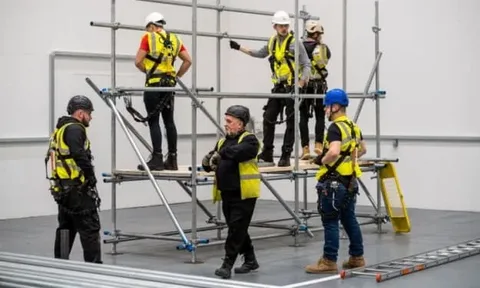
Key safety elements include proper base support, secure bracing, guardrails, stable platforms, safe access points, and correct tie-ins to the structure. Overloading, poor assembly, missing components, and inadequate inspections remain some of the most common causes of scaffold-related incidents. That is why experienced scaffold providers focus on both structural integrity and operational safety at every stage.
Routine inspection is one of the strongest defenses against accidents. Daily checks help identify loose connections, damaged planks, shifting loads, weather-related wear, and fall protection issues before they become serious hazards. On active sites, scaffold conditions can change quickly. Continuous inspection keeps the system safe and ready for use.
The Role of the Right Scaffolding Partner
Choosing the right scaffolding company is an important decision for any construction professional. A reliable provider does more than deliver materials. It supports the project with design input, code awareness, installation expertise, permit coordination, and responsive site service. In New York City, where timelines are tight and regulations are strict, that level of support can make a major difference.
A strong scaffolding partner understands borough-specific project challenges, from narrow streets in Brooklyn to high-rise access in Manhattan. The company should be able to assess project demands, recommend the right system, and install it with attention to both worker safety and public protection. Fast response, quality equipment, engineering capability, and compliance knowledge are all signs of a dependable provider.
Construction professionals should also evaluate safety records, experience with similar projects, turnaround times, and communication standards before selecting a scaffold contractor. The best provider is not simply the cheapest option. It is the one that delivers reliable access, reduces operational risk, and supports the project from setup to dismantling.
Common Applications Across NYC Projects
Scaffolding is used across nearly every category of construction and building maintenance in New York City. Commercial renovation projects rely on scaffold systems for façade access, roofing, waterproofing, and sign installation. Residential work often requires scaffolding for stucco repair, brick pointing, painting, and window replacement. Historic restoration projects need carefully planned access that protects both workers and architectural details. Emergency repairs may require rapid deployment to stabilize work areas and protect the public.
For buildings covered by Local Law 11, scaffolding and sidewalk sheds are often essential for façade inspections and repairs. In these situations, access systems are not optional. They are part of the project’s legal and operational framework.
A Smarter Approach to Project Success
For construction professionals, scaffolding should be viewed as a strategic jobsite asset rather than a basic temporary structure. When it is properly planned, engineered, installed, and managed, it improves productivity, supports compliance, and reduces safety risks. It also helps projects move forward with greater control and fewer disruptions.
In a city where construction is constant and space is limited, dependable scaffold systems are essential to safe and efficient building operations. The professionals who understand how to use them strategically are better positioned to deliver projects on time, maintain compliance, and protect everyone on and around the site.