New York City construction landscape is defined by vertical density, aging building stock, and continuous pedestrian activity. In this environment, scaffolding companies in NYC operate as specialized access-engineering providers rather than simple equipment installers. Every scaffold system must integrate safety, structural performance, and regulatory compliance within limited physical space.
From façade restoration on landmark buildings to high-rise developments in active commercial districts, scaffolding systems serve as temporary infrastructure that enables construction to progress without compromising public safety.

Scaffolding as an Access Engineering Discipline
Beyond Temporary Platforms
Modern scaffolding companies in NYC functions as an engineered access system. Contractors evaluate:
- Building geometry and elevation
- Load transfer to ground and structure
- Wind exposure and weather patterns
- Pedestrian and vehicular circulation
- Adjacent property constraints
This approach ensures scaffolding supports workers, tools, and materials while maintaining stability in dynamic urban conditions.

Common Scaffolding Systems Used Across NYC Boroughs
Pipe and Coupler Scaffolding
Widely used for irregular facades and historic buildings, pipe and coupler systems allow maximum configurational flexibility while maintaining load integrity.
Mast Climbing Work Platforms
These motorized systems are increasingly used on large-scale façade projects, offering adjustable heights, enhanced productivity, and improved safety controls.
Suspended Access Equipment
High-rise buildings in Manhattan often require suspended scaffolds for inspection, maintenance, and repair activities above street level.
Sidewalk Protection Systems
NYC law requires pedestrian protection during exterior construction. Sidewalk sheds and overhead protection systems are designed to meet structural and clearance standards without obstructing businesses or foot traffic.
Regulatory Oversight Governing NYC Scaffolding Projects
NYC Department of Buildings Compliance
Scaffolding installations are regulated under NYC Building Code Chapter 33, which mandates:
- DOB approved drawings
- Permit filings by licensed professionals
- Regular inspections by competent persons
- Compliance with facade safety requirements
Professional scaffolding companies manage these obligations to prevent violations and project delays.
OSHA Integration
Federal OSHA standards establish baseline safety requirements for scaffold construction, access, and worker protection. NYC scaffolding contractors integrate OSHA guidelines with local code requirements to ensure full compliance.
Engineering and Design Coordination
Professional scaffolding companies collaborate with structural engineers to produce:
- Site specific scaffold drawings
- Load and tie-in calculations
- Wind bracing and anchorage plans
- DOB filing documentation
Engineering oversight ensures scaffolding systems perform reliably throughout the project duration.
Safety Systems for Workers and the Public
Worker Protection Measures
Certified scaffolding contractors implement:
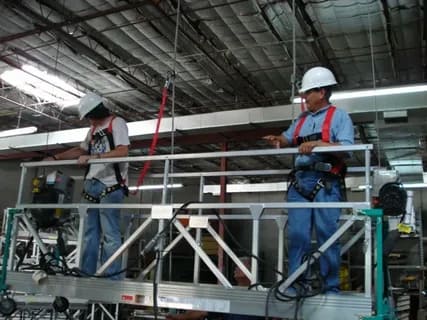
- Guardrail systems and fall arrest equipment
- Proper decking and load distribution
- Training for erection, use, and dismantling
- Routine condition monitoring
Pedestrian and Property Safety
In NYC densely populated neighborhoods, scaffolding must incorporate:
- Debris netting and overhead protection
- Clear pedestrian pathways
- Secure tie ins to prevent movement
Safety management is both a legal obligation and a reputational factor for scaffolding providers.
Project Execution Process
A typical NYC scaffolding project follows a structured workflow:
- Initial Site Survey and Risk Evaluation
- Engineering Design and Permit Submission
- Material Staging and Logistics Planning
- Installation by Certified Scaffold Crews
- Ongoing Inspections and Adjustments
- Dismantling and Site Clearance
Clients and Applications Across NYC
Scaffolding companies in NYC serve a wide client base, including:
- General contractors and construction managers
- Property owners and facility managers
- Real estate developers
- Municipal and institutional clients
Each project requires a tailored access strategy based on building type and location.
Selecting a Professional Scaffolding Contractor in NYC
Key selection criteria include:
- Valid NYC DOB licensing and insurance
- Proven experience with similar projects
- Engineering and permit management capabilities
- Strong safety record and inspection protocols
- Ability to meet project timelines
Experienced scaffolding contractors act as compliance partners, not just service providers.
Evolving Trends in NYC Scaffolding Solutions
As urban construction advances, scaffolding companies are adopting:
- Modular and prefabricated systems
- Enhanced pedestrian shed designs
- Digital inspection and reporting tools
- Improved safety and productivity technologies
These developments support safer and more efficient construction in high-density environments.
What services do scaffolding companies in NYC offer?
They provide scaffold design, installation, maintenance, permit filing, and dismantling for construction, restoration, and façade projects.
Are NYC scaffolding companies licensed?
Yes, professional scaffolding contractors must hold NYC Department of Buildings (DOB) licenses and meet OSHA safety requirements.
What types of scaffolding are commonly used in NYC?
Supported frame scaffolds, suspended scaffolds, mast climbing platforms, and sidewalk sheds are the most common systems.
Why is scaffolding safety important in NYC?
High pedestrian density, adjacent buildings, and strict DOB regulations make safety crucial for workers and the public.
Who oversees scaffolding compliance in NYC?
The NYC Department of Buildings regulates scaffolding, while OSHA standards ensure worker safety.
What is a sidewalk shed?
A sidewalk shed is a protective overhead structure installed over pedestrian pathways during exterior construction.
How do scaffolding companies handle permits in NYC?
They prepare site-specific drawings, submit DOB filings, and ensure scaffold installation complies with all local laws.
Can scaffolding companies work on historic buildings?
Yes, companies often use flexible modular or pipe-and-coupler scaffolds to adapt to irregular façades and preserve architectural integrity.
How long does it take to install scaffolding in NYC?
Installation time varies by project size and complexity, ranging from a few days for small sites to several weeks for high-rise projects.
How do scaffolding companies ensure public and worker safety?
By using certified crews, guardrails, debris netting, routine inspections, and load-tested scaffolding systems.
Conclusion
Scaffolding companies in NYC provide essential access systems that support safe, compliant, and efficient construction throughout the city. Their role combines engineering expertise, regulatory knowledge, and operational precision, making them indispensable partners in urban development.
For any exterior construction or maintenance project in New York City, engaging a professional, code-compliant scaffolding company ensures safety, continuity, and regulatory confidence.
- By: Addaim
- 0 comment
Leave a Reply